What is the difference between logo and branding?
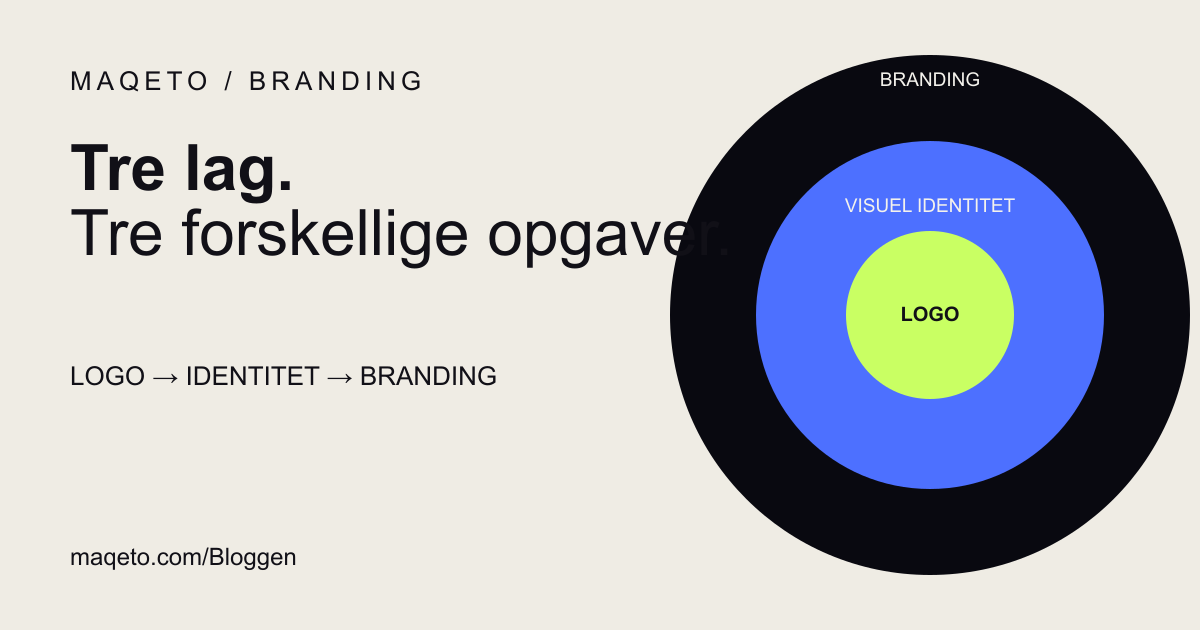
A logo is the company's visual characteristic. A visual identity is the system around the logo: colors, typography, images, graphics and rules for use. Branding is the bigger picture: position, promise, messaging, behavior and the overall experience people associate with the company.
The logo identifies. The identity creates recognisability. The branding creates meaning and direction.
- Choose a logo if you lack a basic characteristic and have few communication surfaces.
- Choose a visual identity if the expression is to work the same on the website, social media, sales material and signs.
- Choose branding if the problem is unclear position, target group, message or experience — not just the appearance.
- Don't buy the biggest package. Buy the smallest solution that solves the actual problem.
Logo vs. visual identity vs. branding
| Logo | Visual identity | Branding | |
|---|---|---|---|
| Purpose | Identify the company | Create a recognizable system | Create a clear position and experience |
| Typical deliveries | Logo, variants and files | Logo, colors, typography, image style and guide | Research, position, narrative, messages, identity and implementation |
| Solving | Missing or weak characteristic | Visual disparity | Unclear relevance and differentiation |
| Is enough when | You are early and use few surfaces | The direction is clear, but the expression is scattered | Business and communication must come together |
| Is not enough when | The message is unclear | The position is unclear | The problem is simply a missing file or template |
The main difference: A logo can be designed. A brand is created through what the company promises, shows and delivers again and again.
When is a logo enough?
A logo can be the right first step for a new business with a clear name, a simple offer and few points of contact. It provides a characteristic that can be used on invoices, websites, work clothes and social profiles.
Don't just ask for "a nice logo". Agree readability in small sizes, dark and light version, file formats and simple guidance for free zone and colors. The Danish Patent and Trademark Office describes that trademarks can include words, figures such as logos or slogans. Legal registration is a separate assessment; a design project does not automatically grant exclusive rights.
When do you need a visual identity?
A visual identity becomes necessary when several people or suppliers have to produce material without the expression falling apart. The system must make good choices easier in everyday life.
- Logo and variants for different formats.
- Primary and secondary colors with contrast requirements.
- Typography and clear hierarchy.
- Image style and principles for photography or illustration.
- Graphic elements, icons and movement.
- Templates for the main real surfaces.
- A short guide that is actually used.
An identity does not necessarily have to contain fifty templates. If the company only uses website, offers and LinkedIn, the system should start there.
When is branding the real task?
Branding is relevant when customers do not understand the difference between you and the alternatives, when the company has grown from its original expression, or when sales, product and marketing tell different stories.
The work typically begins before the design: Who is the most important target group? What problem should the company own? What promise can it document? Which personality should be experienced in language, design and service?
The Danish Design Center and DI's report Design Delivers 2025 points out that Danish companies that use design often experience value in, among other things, brand and competitiveness. The results are the companies' own assessments and should not be read as a guarantee of growth. The useful point is more down-to-earth: Design creates the most value when it is linked to a business task.
Choose the right level in four steps
- Name the problem. Are you hard to recognise, visually disparate or strategically unclear?
- Map the surfaces. Write the places where customers meet you: website, cars, shop, offers, advertisements, packaging and service.
- Assess the change. Should you simply get a uniform shape, or should the target group, position and messages also change?
- Order supplies that can be used. Require files, guidelines, templates, rights and responsibilities for implementation described in the offer.
Three realistic situations
New independent with one offer: Start with name, a solid logo and a simple basic identity. Save the heavy fire process until the market has provided more learning.
Company with five employees and uneven material: The position may be fine, while the expression varies. Here, a visual identity and specific templates are often the right scope.
Established company that customers confuse with competitors: A new logo alone rarely changes the problem. Start with position, target group, promise and messages; then design the identity around the direction.
Frequently asked questions
What is the difference between a logo and branding?
A logo is a visual characteristic. Branding is the work with the overall position, narrative and experience that people associate with the company. The logo can be part of the branding, but cannot stand alone as the entire brand.
What does a visual identity contain?
A visual identity typically includes logo usage, colors, typography, image style, graphic elements and guidelines. The scope should reflect the surfaces the company actually uses.
Can you settle for a logo?
Yes, if the company is very early, has few surfaces and simply lacks a clear characteristic. When several people and channels must communicate uniformly, an identity system becomes more valuable.
Should branding be done before a new website?
The most important direction should be clarified before the design: target group, position, messages and visual principles. Otherwise, the website risks looking good without making the company clearer.
Get the services matched before you order.
Answer a few questions about goals, team and status. The configurator collects a recommendation without forcing everyone into the same package.
See recommended services ↗︎Sources and caveats
The guide separates design deliverables according to purpose. It is not legal advice and does not promise a specific business effect.